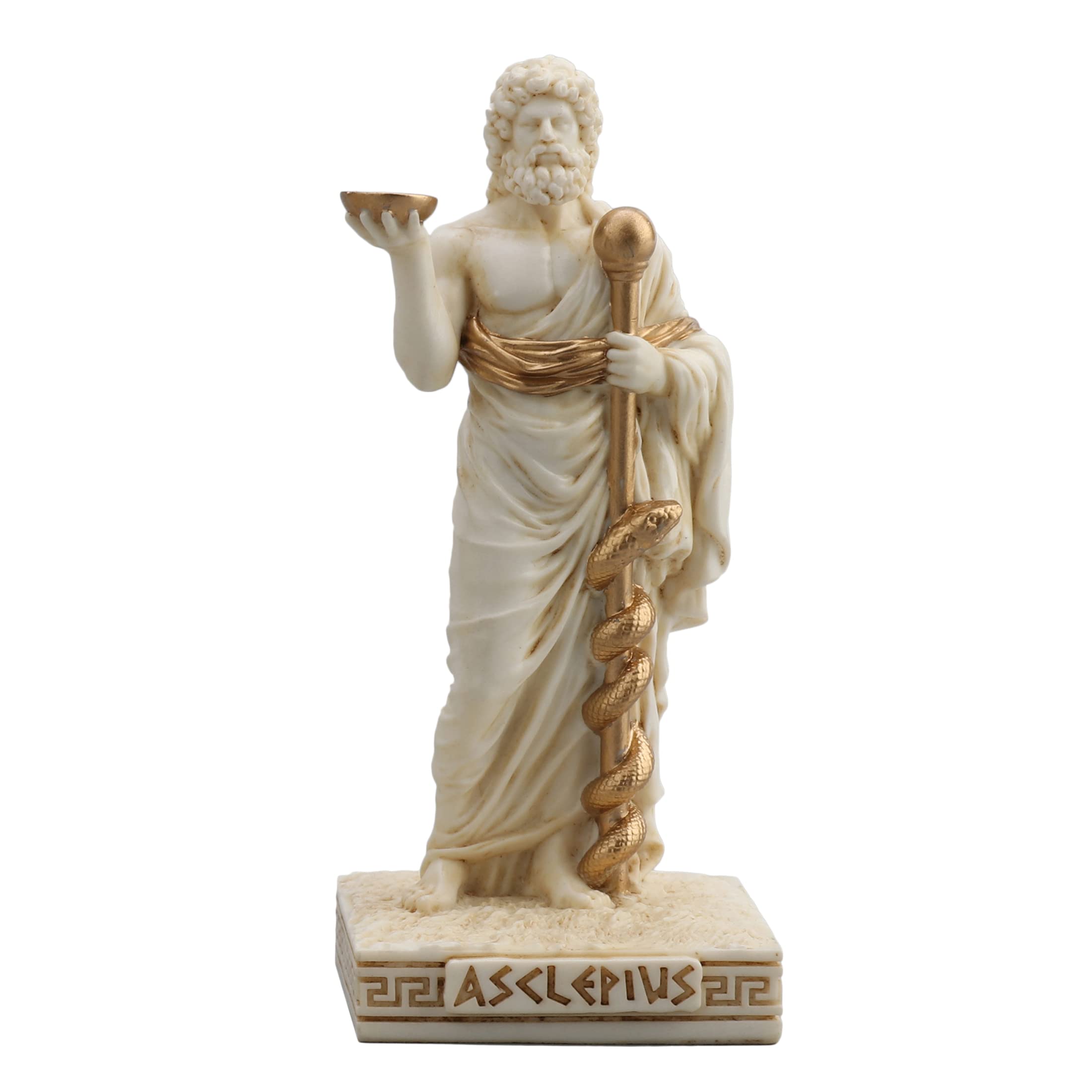

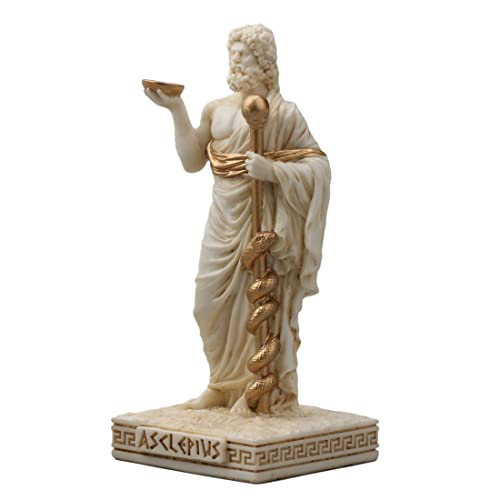
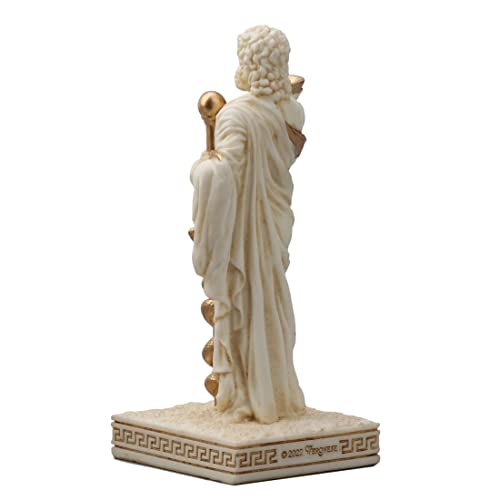
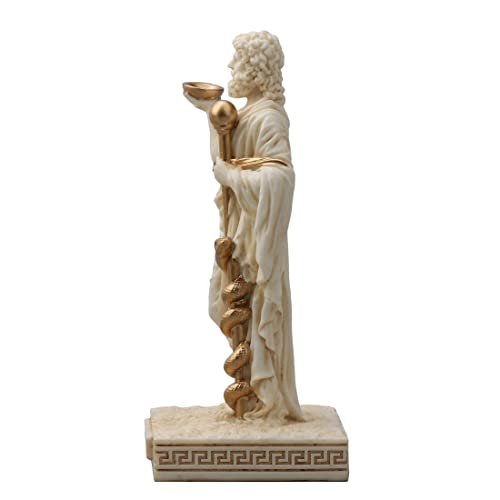
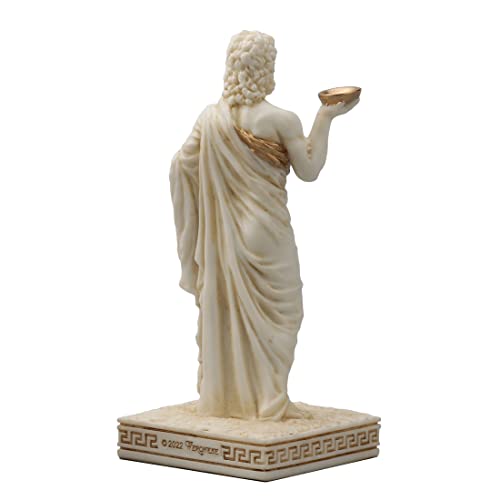
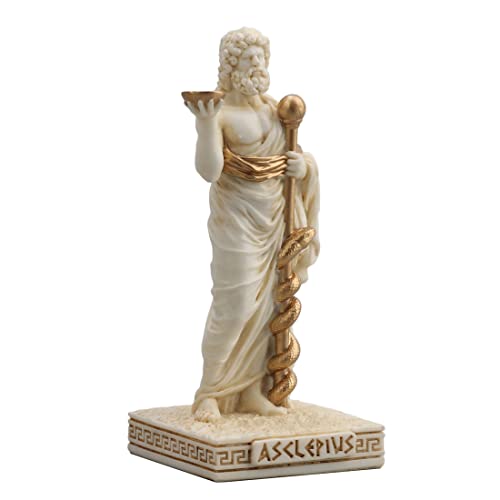

Veronese Design Greek Gods Miniature Figurine (Asclepius)
In Stock
$6.89
$9.80
save
30%
Select Options
Free Shipping
We offer free delivery service
Warranty Protection
Up to 5 years warranty on selected items
Easy Returns
30-day return policy for all items
Trust and Reliability
Customer service available anytime
Description
Asclepius, the Greek god of medicine, healing, and physicians, is associated with rejuvenation and well-being. He is often depicted with a snake-entwined staff named the Rod of Asclepius, and is the son of Apollo and the mortal princess Coronis. The cult and temples of Asclepius, known as Asclepeions, served as healing centers in ancient Greece.
The Rod of Asclepius, a staff with a single snake coiled around it, has become a widely recognized symbol of the medical profession. This symbol represents the healing powers and wisdom of Asclepius, who was believed to have the ability to cure diseases, heal the sick, and even raise the dead.
The son of the sun god Apollo and the mortal princess Coronis, Asclepius was trained in the art of medicine by the centaur Chiron. He quickly became renowned for his exceptional healing abilities, and his fame spread throughout the ancient world. Asclepius' skills were so great that he was even able to bring the dead back to life, a feat that angered the gods, who saw it as a challenge to their power.
The Asclepeions, or healing temples dedicated to Asclepius, were important centers of medical knowledge and practice in ancient Greece. These sanctuaries were often located in peaceful, natural settings, and were designed to promote healing and well-being. Patients would come to the Asclepeions to seek treatment, and would often engage in various rituals and ceremonies in the hope of being cured.
One of the most famous Asclepeions was located in Epidaurus, a small town in the Peloponnese region of Greece. The Epidaurus Asclepieion was renowned for its impressive architecture, including a large theater that was used for dramatic performances and other healing rituals. Patients would often stay at the Asclepieion for extended periods of time, undergoing various treatments and participating in the temple's activities.
In addition to his role as a healer, Asclepius was also associated with the concept of rejuvenation and well-being. He was believed to have the power to restore youth and vitality, and was often depicted as a youthful, handsome figure.
The cult of Asclepius was widespread throughout the ancient Greek world, and his temples and shrines could be found in many cities and towns. The god was highly revered, and his followers often made offerings and performed rituals in the hope of receiving his divine favor and healing.
Despite the passage of time, the legacy of Asclepius and his healing arts continues to be felt in the modern world. The Rod of Asclepius remains a widely recognized symbol of the medical profession, and the concepts of holistic healing and well-being that were central to Asclepius' cult have continued to influence the practice of medicine and healthcare.
product information:
| Attribute | Value | ||||
|---|---|---|---|---|---|
| product_dimensions | 1.5 x 1.5 x 3.4 inches | ||||
| item_weight | 1.76 ounces | ||||
| manufacturer | Veronese Design | ||||
| item_model_number | WU78026AA | ||||
| customer_reviews |
| ||||
| best_sellers_rank | #1,564,986 in Home & Kitchen (See Top 100 in Home & Kitchen) #13,308 in Collectible Figurines | ||||
| date_first_available | March 7, 2023 |